Dumai, November 28, 2025 — The Undergraduate Program of Mechanical Engineering, Faculty of Engineering, Universitas Riau, conducted an Industrial Visit to PT Kilang Internasional Pertamina Dumai as a concrete effort to strengthen academic–industry integration. This activity was designed to bridge theoretical knowledge gained in the classroom with real-world industrial practices, particularly in the oil and gas sector.
The industrial visit was accompanied by Hanif Nugroho Aji, S.T., M.T. and Rahmatsyah Maksum Ramsi, S.T., M.T., lecturers of the Mechanical Engineering Undergraduate Program. The lecturers guided students in connecting fundamental and applied mechanical engineering concepts with actual industrial systems, equipment, and operational procedures implemented in a refinery environment.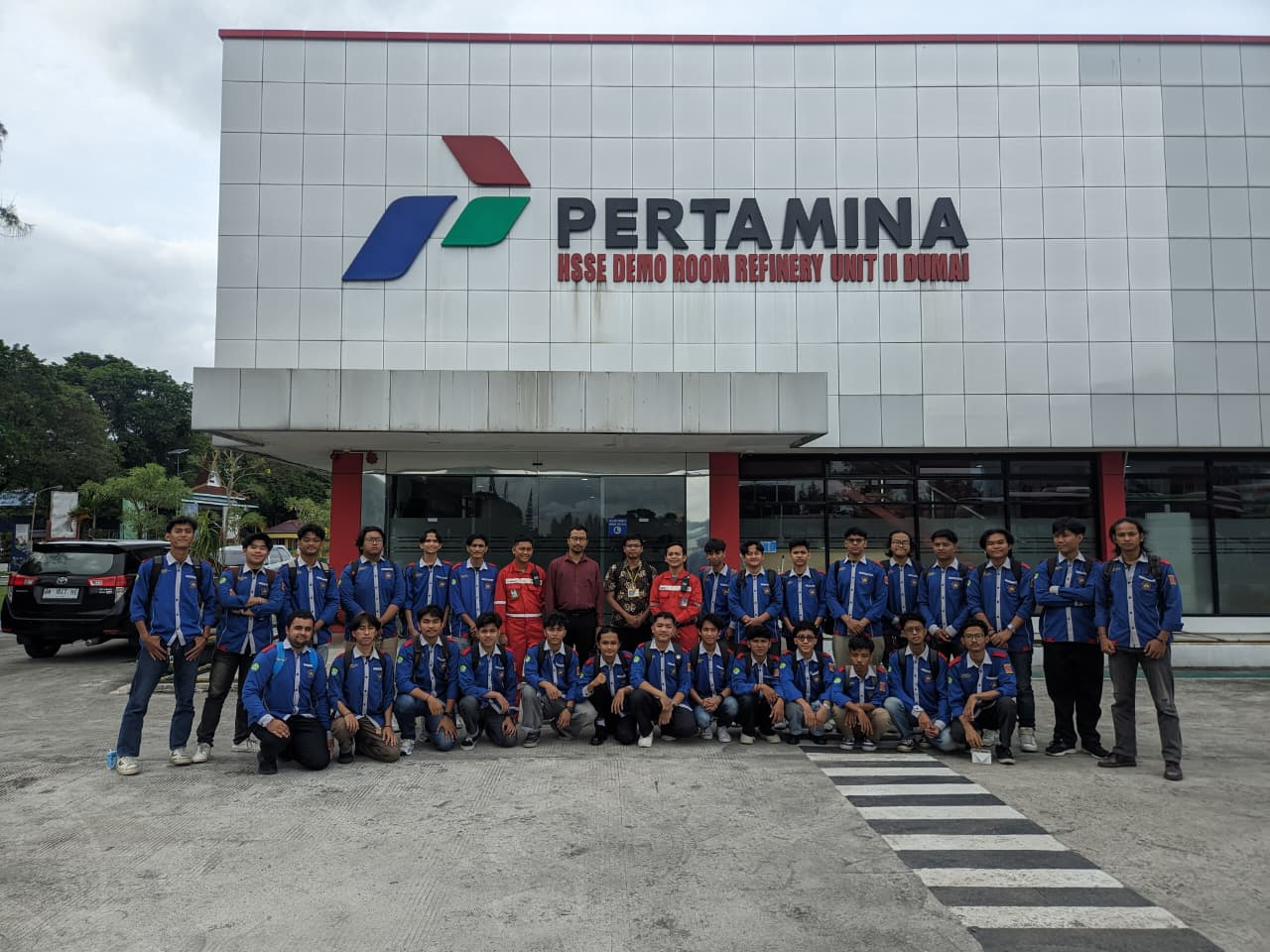
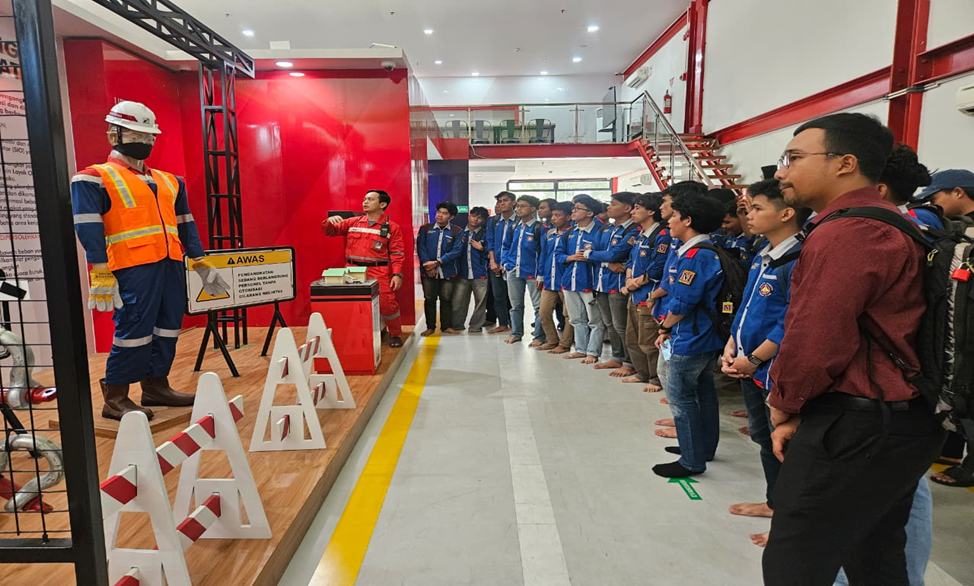
Through this activity, students gained first-hand experience related to oil refinery processing operations, with a particular focus on the application of lifting and material handling equipment, as well as the implementation of Occupational Health and Safety (OHS) standards in the oil and gas industry. This academic–industry integration is expected to enhance students’ technical competence, analytical skills, and professional readiness to face the challenges of the industrial workplace.
From the lecturers’ perspective, the industrial visit served as a strategic platform to enrich their understanding of how theoretical concepts are applied in real industrial settings. The insights gained from direct observation and interaction with industry practitioners can be utilized to strengthen teaching materials, develop contextual case studies, and align the curriculum more closely with current industrial needs. Consequently, academic–industry integration contributes not only to student development but also to the overall improvement of educational quality.
For PT Kilang Internasional Pertamina Dumai, this activity represents an active contribution to the development of future human resources who possess both strong academic foundations and practical industrial insight. The visit also reinforces the role of industry as a strategic partner of higher education institutions in preparing graduates who are competent, adaptive, and competitive in the professional world.
The series of activities began with coordination between the Mechanical Engineering academic team and representatives of PT Kilang Internasional Pertamina Dumai regarding scheduling and the program agenda. Subsequently, lecturers and students traveled from Pekanbaru City to Dumai City, where the industrial visit was conducted.
Upon arrival, the activity commenced with welcoming remarks from representatives of the lecturers and PT Kilang Internasional Pertamina Dumai, emphasizing the importance of collaboration and integration between academia and industry. The session continued with the presentation of a commemorative plaque as a symbol of institutional cooperation, followed by a joint documentation session.
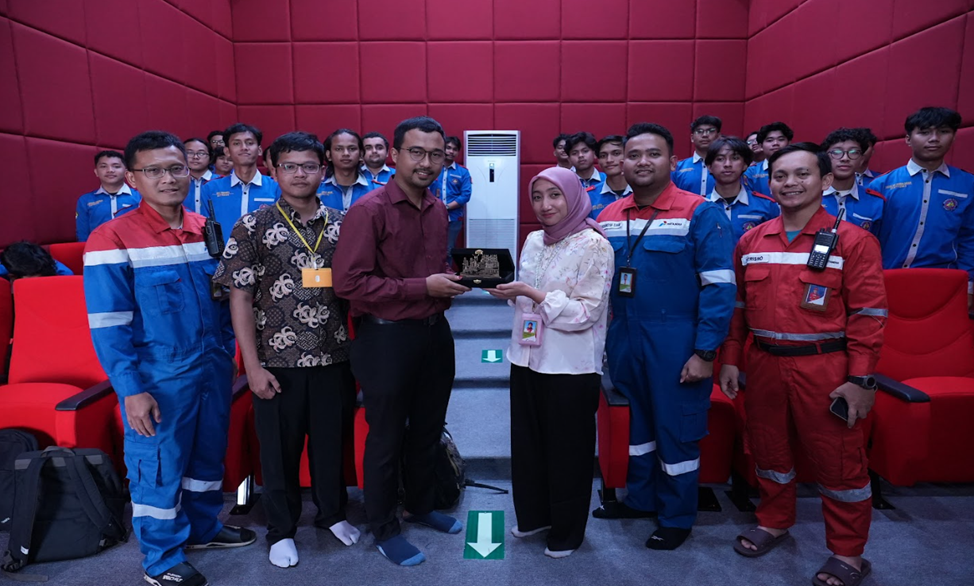
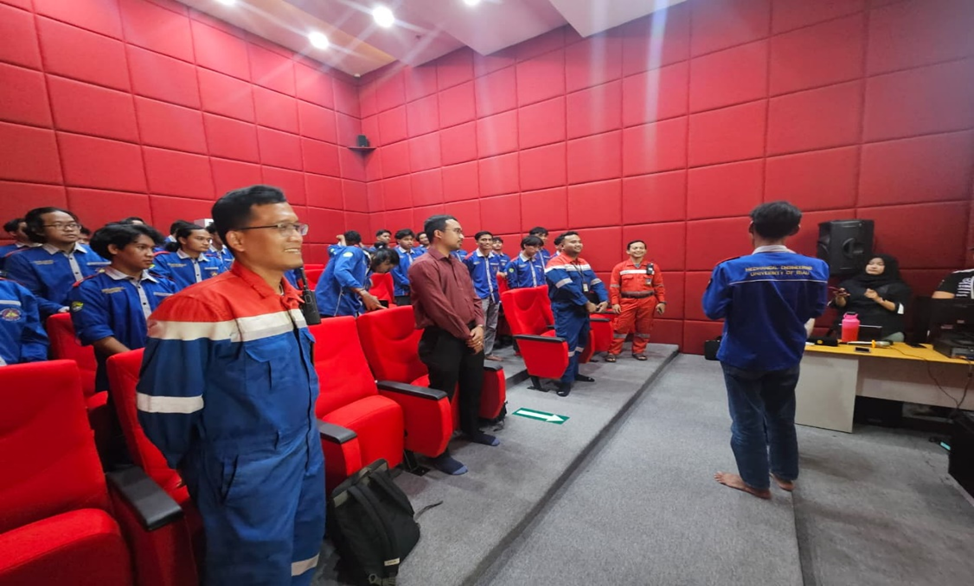
Students then participated in a technical presentation covering an overview of oil refinery processing operations, including system workflows, major equipment, and standard operational procedures. During this session, academic–industry integration was clearly reflected through explanations that linked mechanical engineering theories with their real-world industrial applications, particularly in the use of lifting and material handling equipment.
The visit continued with an explanation and demonstration of Occupational Health and Safety (OHS) procedures implemented at PT Kilang Internasional Pertamina Dumai. Students gained direct insight into the critical importance of compliance with safety standards to ensure operational efficiency, workplace safety, and sustainable industrial performance.
Through the implementation of this industrial visit, the Undergraduate Program of Mechanical Engineering, Faculty of Engineering, Universitas Riau, reaffirms its commitment to strengthening academic–industry integration as a core learning strategy. It is expected that this activity will contribute to producing Mechanical Engineering graduates who excel academically, possess strong industrial awareness, demonstrate professional work ethics, and are well prepared to face the demands of the national and global industrial sectors.